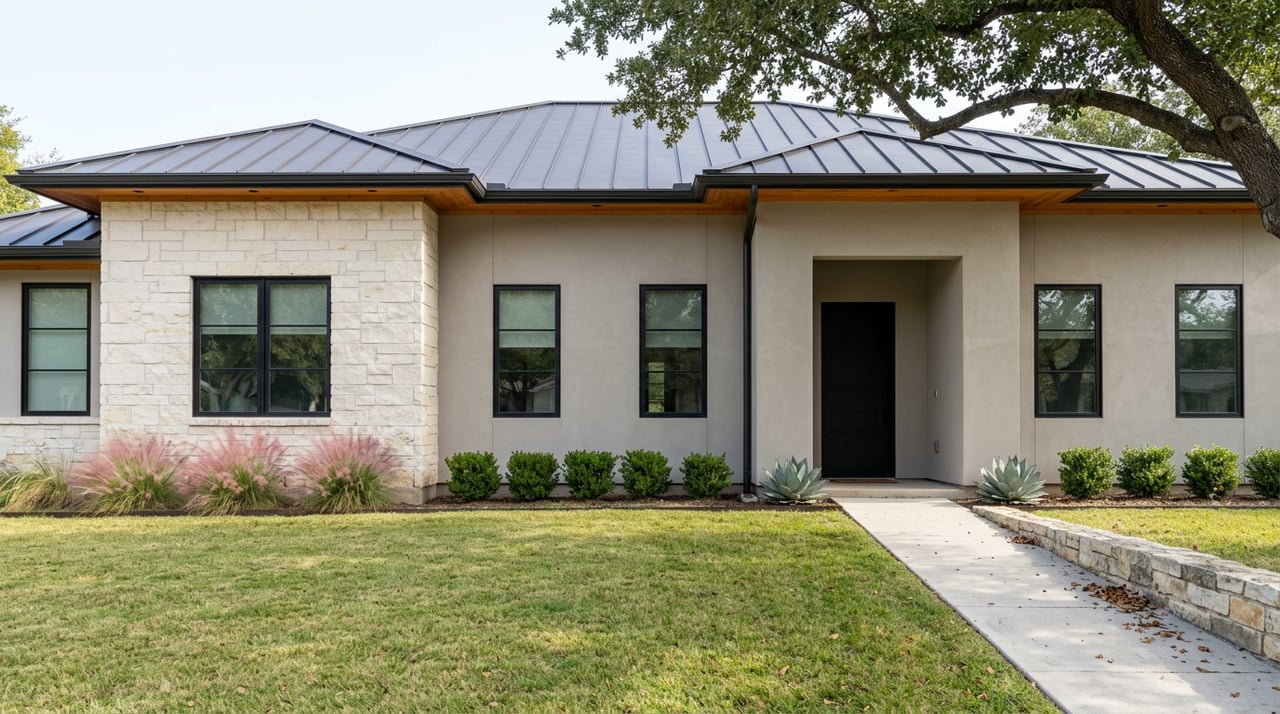
Drive through a Bloomfield Homes community in Rockwall County right now and you will see it on the signage for the Signature Series: "No MUD! No PID!" printed like a bragging right, because in this market it is one. A few miles east in McLendon-Chisholm, Sonoma Verde posts its own tax rate sheet for buyers, and the disclosed figures total $2.14, combining the county, school district, and city tax rates with a Public Improvement District assessment tied to the lot.
Same county. Same general price range. Two builders making opposite arguments about the exact same line item. That gap is the thing worth understanding before you fall for a floor plan, because it can move a monthly payment by hundreds of dollars on homes that show identical price tags in the sales office.
What A MUD Or PID Actually Charges You
A Municipal Utility District is a small government created inside a new development to pay for the water lines, sewer, drainage, and roads a builder needs before the city has extended its own services out that far. The MUD borrows the money through bonds, then repays those bonds with a dedicated property tax that shows up as its own line on your annual bill. A Public Improvement District works differently but lands the same way on your statement: it is a special assessment, created by the city under Texas Local Government Code Chapter 372, that funds things like roads, sidewalks, landscaping, and entry monuments inside the district's boundary. The City of Fate explains that, unlike a MUD tax, a PID assessment can typically be paid off in full at any point, and it travels with the lot rather than the homeowner if you sell before it is retired.
Neither of these appears on the price tag. Both appear on the tax certificate your title company pulls at closing, which is often the first moment a buyer sees the real number.
One Community's Own Numbers
Sonoma Verde's developer discloses the breakdown directly on its own site, and it is worth walking through because it shows exactly how the total gets built. The disclosed figures total $2.14: Rockwall County at $0.2547, Rockwall ISD at $1.0269, the City of McLendon-Chisholm at $0.0897, and a PID assessment of roughly $0.77 that is based on lot size rather than home value.
| Taxing Entity | Disclosed Rate or Assessment |
|---|---|
| Rockwall County | $0.2547 |
| Rockwall ISD | $1.0269 |
| City of McLendon-Chisholm | $0.0897 |
| Sonoma Verde PID | ~$0.77 |
| Combined | $2.14 |
The entry price for Sonoma Verde's 80-by-120 collection is $675,000. Because the PID assessment is based on lot size rather than home value, the combined figure cannot be multiplied by the home price to calculate the annual charge. A third-party relocation blog covering the same community quotes a lower "all-in" figure closer to 1.9%, built from a stated base rate around 1.4% plus MUD and PID components. Since those figures may use different bases, neither percentage alone gives a parcel-specific annual charge; verify the applicable amounts against the primary disclosure.
A Bigger Lot, A Different Assessment
Here is where the story stops being simple. A few minutes away, Windsor Homes' Ridge Pointe Estates sits on one-acre lots off Highway 205, also inside Rockwall ISD, also in McLendon-Chisholm. Its disclosed numbers show a $100-a-month HOA fee and a special assessment rate of 1.52%. That percentage is not directly comparable to Sonoma Verde's combined figure, which includes a lot-size-based PID assessment.
Run the same $675,000 home through Ridge Pointe's structure and the special assessment alone comes to roughly $855 a month. Add the $100 HOA and you land near $955 a month in recurring costs tied to the lot and the association. Because Sonoma Verde's PID amount depends on lot size, compare the communities using parcel-specific figures rather than these headline amounts alone.
The lesson is not that acreage communities are automatically cheaper. It is that the amenity-heavy masterplan with the resort pool, the activity center, and the fishing ponds pays for those things somewhere, and in Rockwall County that somewhere is usually the PID line, not the sticker price. A bigger lot with fewer shared amenities can carry a lighter assessment even when the home itself costs the same.
Two Decades Of Bonds Nobody Introduced You To
The reason any of this exists traces back to 1971, when the construction of Lake Ray Hubbard opened up land east of Dallas that had no city infrastructure to speak of. Centex bought 1,700 acres of that raw land, land that is now known as Woodcreek and the Reserve at Chamberlain in Fate, and needed a way to finance roads and utilities before a single home could be sold. The Rockwall County Consolidated Municipal Utility District No. 1 was actually created back in 1972, then sat dormant for three decades until the district confirmed its first board of directors in 2002 and sold its first bonds in 2006.
That detail matters for anyone shopping resale in these older MUD-covered subdivisions today: the bonds behind your tax line were sold twenty years ago, and the repayment schedule that follows is measured in decades, not years. A MUD tax shrinks as the bonds get retired, but nobody sets a hard expiration date up front. The Fate city government itself notes that the timeline depends entirely on when each district's specific bonds were issued and how the repayment schedule runs from there.
The County Is Still Arguing About Who Pays
This is not a settled question even now. In its Fiscal Year 2026 budget, the Rockwall County Commissioners Court approved an additional $355,000 in legal funds specifically to defend the county against two lawsuits stemming from its own push to require developers to help fund the infrastructure their projects demand. That fight is happening in the current fiscal year, which started October 1 and runs through the end of September 2026.
Whatever the outcome, it is a reminder that the allocation of infrastructure costs between developers, the county, and the homeowners who eventually move in is still actively contested in Rockwall County, not a fixed formula everyone quietly agreed to years ago.
The HOA Number Is Also Not Final
The $100-a-month HOA fee quoted at Ridge Pointe Estates today is being set by a board the builder controls, a period Texas law calls declarant control. Under Texas Property Code Section 209.00591, once 75% of the homes or lots in a community have sold, the association has 120 days to seat at least one-third of its board with homeowners who have no connection to the developer. Full transition, including handing over the reserve fund, the contracts, and the financial records, typically takes another 12 to 18 months after that trigger.
None of that is a criticism of any specific builder. It is simply a reminder that a dues figure quoted while the builder still holds the gavel is a starting point, not a locked-in rate. Rockwall County's broader HOA range runs from roughly $150 to $400 a month, mostly in older, resident-run communities that have already been through a budget cycle or two. A brand-new community's lower opening number has not been tested that way yet.
Where To Check Before You Write An Offer
The Rockwall County Appraisal District's parcel search lets you look up the exact taxing entities attached to any specific address, MUD and PID included, rather than relying on a builder's verbal estimate. Sonoma Verde's own disclosure notes that its PID assessment runs on a 30-year repayment schedule that began in 2019, which means a resale buyer in 2026 is stepping into a balance with roughly 23 years left rather than starting the clock over, and the assessment can be prepaid at any time without penalty. That prepayment option is worth asking about directly, because it can become a real point of negotiation with a seller or a builder rather than a fixed cost you simply absorb.
Before writing an offer in any new-construction Rockwall community, it is worth pulling the parcel record yourself, asking for the current PID payoff figure if one exists, and requesting the HOA's most recent budget rather than the number printed on the community brochure.
A Few Direct Questions
Does a MUD tax ever go away? It can, once the underlying bonds are fully repaid, though the exact timeline is set by each district's bond schedule rather than a fixed date.
Is a PID assessment the same as a MUD tax? No. A MUD is a separate taxing government that levies an ongoing property tax. As noted above, a PID is a city-created assessment.
Does a home with no MUD or no PID automatically cost less to own? Not necessarily. It usually means fewer developer-financed amenities, which can be a fair trade depending on what you actually want out of the community.
Where do I find the exact rate for a specific address? The Rockwall County Appraisal District's property search tool lists every taxing entity attached to a parcel, including any MUD or PID rate.
Numbers like these are exactly why a walk-through with someone who reads these disclosures for a living is worth the twenty minutes. Evelyn Escuadra can pull the full tax and assessment picture on any specific Rockwall-area address before you write an offer, so the number you plan around is the real one.
This article is general information, not legal, tax or financial advice. Consult a qualified professional about your situation.