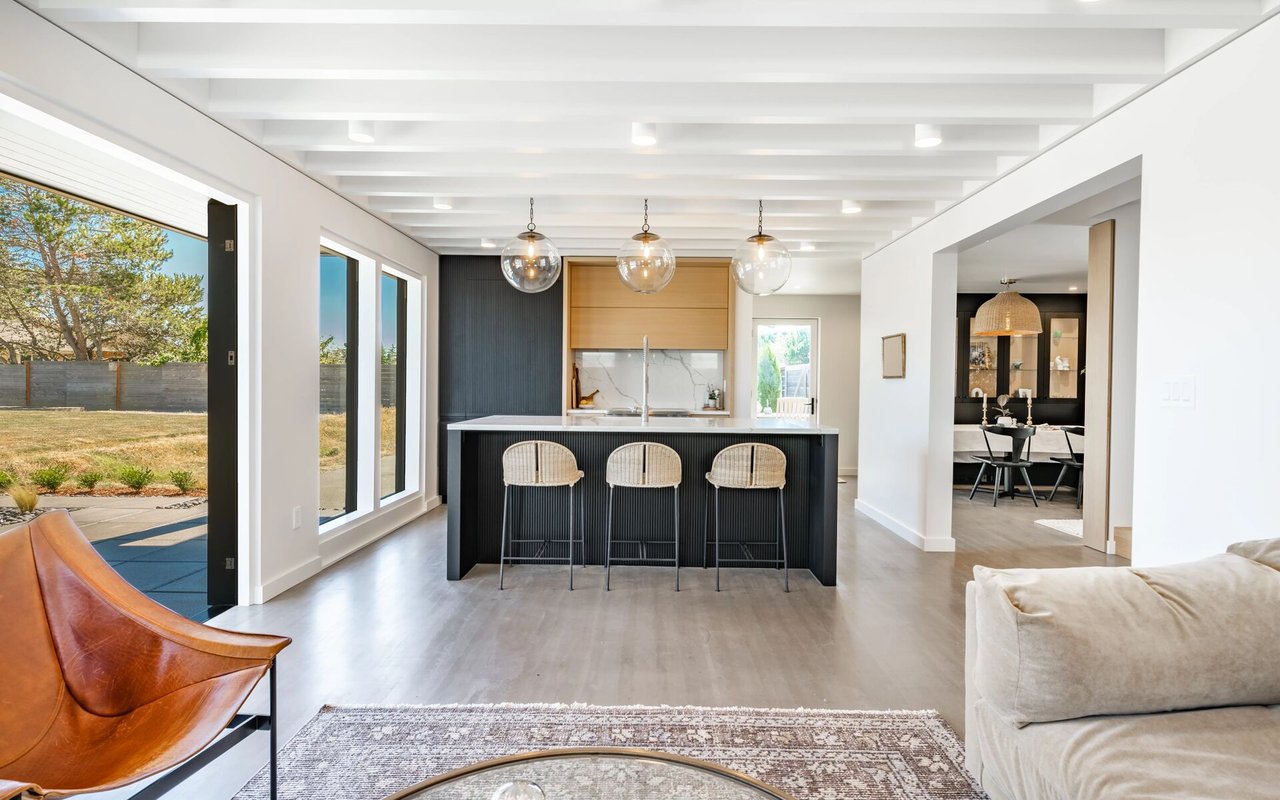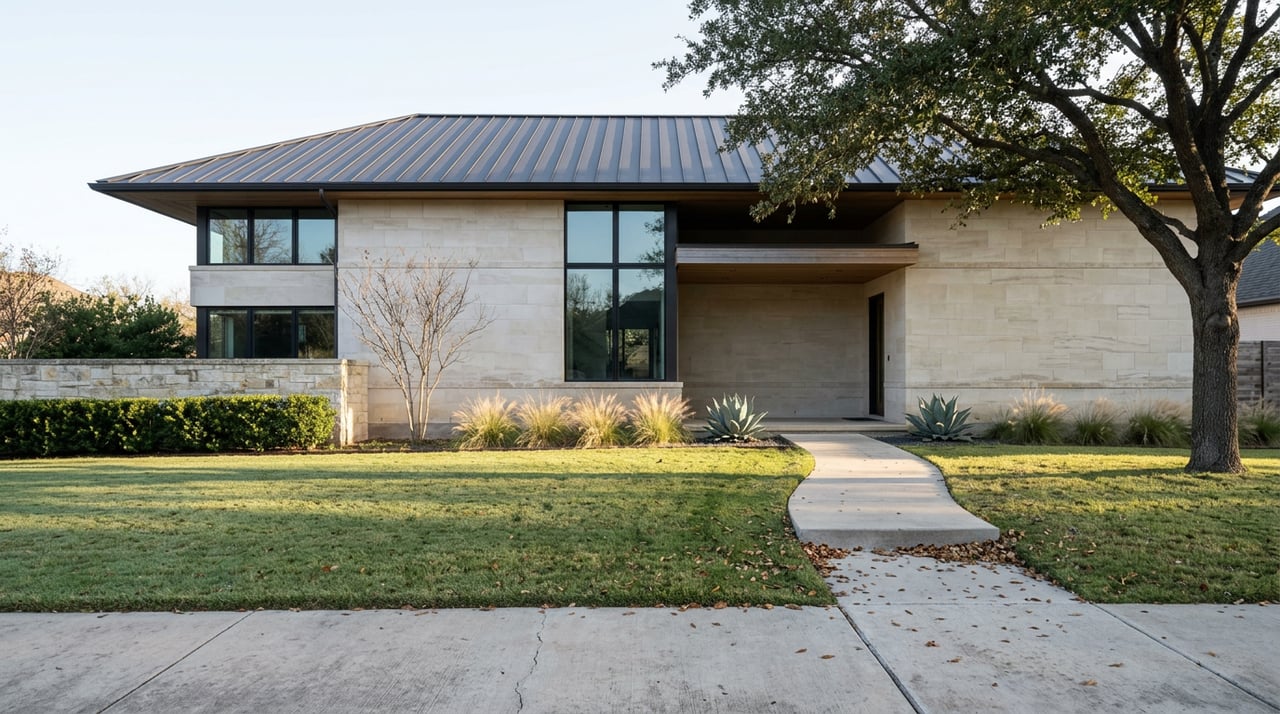
Drive down Larchmont or Leland on any weekday afternoon and you'll pass a 1960s brick ranch with a station wagon in the driveway, then two doors down, a construction fence around a cleared lot where a three-story stone-and-glass spec home is going up. Same street. Same school zoning. Same block of the L Streets, the neighborhood in Lake Highlands' 75238 zip code where nearly every street name starts with the letter L: Larchmont, Leland, Linkwood, Lanshire, Liptonshire.
If you've been comparing neighborhoods using the median price you saw on a portal search, this is where that number stops making sense. Lake Highlands as a whole has been trading with a median sale price hovering just above $600,000 over the trailing twelve months, up roughly 13 percent from the year before. Pull the same window for the L Streets specifically and the median drops to $325,000, down 4 percent year over year. Same zip code, same school district, a nearly two-to-one gap. That gap isn't a mistake in the data. It's the clearest evidence that Lake Highlands doesn't have one housing market right now. It has at least two, running on completely different pricing logic, and they happen to share a mailing address.
The Zip Code With Two Medians
Here's what that $325,000 figure is actually made of. It's the blended result of a year's worth of L Streets closings, and in a neighborhood where builders are actively working the block, a meaningful share of those closings are original-condition 1950s and 60s ranches selling for something close to land value, not livability value. A house that would need a full renovation to be comfortable and a house that's about to be demolished sell for roughly the same price to two very different kinds of buyers, and both sales land in the same median.
Meanwhile, homes in the L Streets sell in a median of 42 days, well ahead of the roughly 70-day national average. That speed usually reads as high demand. In this pocket, it's often a different signal entirely: builders moving fast on lots before they hit the open market, sometimes negotiating directly with owners before a listing ever appears on the MLS.
| Lake Highlands (citywide) | L Streets | |
|---|---|---|
| Median sale price, trailing 12 months | ~$600,000, up ~13% YoY | $325,000, down 4% YoY |
| Median days on market | ~60 days | 42 days |
The wider Lake Highlands number includes those same L Streets transactions, plus renovated ranches in pockets like Forest Hills and Merriman Park, plus finished new construction throughout the neighborhood's roughly 46 subdivisions. Blend all of that together and you get a median that describes none of the individual products particularly well.
Why The House Doesn't Always Matter
The other half of the L Streets story is what replaces those ranches once a builder closes on one. Fifer Custom Homes, Robert Elliott Homes, Avant Group, and Cielo Custom Homes are among the firms active in Lake Highlands' 75238 zip code right now, with Fifer specifically building new construction on cleared L Streets and White Rock Valley lots, and their finished product lists nowhere near $325,000. New construction in these pockets has recently listed as high as $1,895,000, with most spec homes running between $1.2 million and $2 million and select custom builds pushing past $2.5 million.
That's the mechanism worth understanding before you tour anything in this pocket. The land underneath an L Streets ranch carries Richardson ISD zoning, proximity to White Rock Lake and Flag Pole Hill, and access to the DART White Rock Station, whether the house sitting on it is move-in ready or scheduled for demolition. The school district doesn't attach to the structure. It attaches to the parcel. So a builder evaluating a teardown candidate isn't pricing the kitchen or the foundation. They're pricing the dirt, and the dirt is worth roughly the same whether the house on it needs a new roof or a wrecking ball.
For a buyer, this means the condition of the house you're touring tells you less than you'd think about what it should cost, if the lot itself is what's actually driving the number.
The List Price And The Sold Price Are Telling Different Stories
There's a second gap worth knowing about before you lean on any online estimate. Active listing data pulled in July 2026 put the median list price across Lake Highlands at $467,000, with a price per square foot around $240. Closed-sale data for the twelve months ending in August 2026 puts the actual sold median closer to $610,000.
That's not a contradiction so much as two different snapshots of the same market. Active listings, at any given moment, skew toward the inventory that's sitting: original-condition ranches waiting for either a renovation-minded family or a builder's offer. Closed sales skew toward what actually finishes, which is disproportionately renovated homes and completed new construction, because that's what qualifies for financing and what most buyers are actually able to close on. If you're pricing a specific address using an automated estimate, it matters which side of that gap the property sits on, and a five-minute walk-through with someone who knows the pocket will tell you faster than any algorithm.
What Changed In September 2025
None of this teardown activity is happening in a vacuum. Community Impact reported that longtime residents once described the intersection of Skillman Street and I-635 as "that bowl of spaghetti." As Lake Highlands Advocate later recounted, the intersection sat unresolved for twenty years while resident advocate Susan Morgan pushed the project through funding fights, a near-cancellation at the state level, and years of construction. The Skillman Street Arch Bridge, part of the $1.74 billion 635 East project, finally opened to traffic on September 20, 2025.
Six months later, Mattamy Homes broke ground on Lake Highlands Village, an 85-unit gated townhome community, and named the newly finished interchange directly in its own announcement as part of why the site made sense. Those townhomes won't be available to buy anytime soon. Sales are expected to open in June 2027, with the first closings that following September. But a national homebuilder committing to Lake Highlands the same year the neighborhood's worst traffic bottleneck finally cleared is a signal worth reading correctly: institutional capital is betting the connectivity fix makes the land underneath Lake Highlands more valuable, which only reinforces why the L Streets teardown pattern is accelerating rather than slowing down.
What This Means If You're Comparing Lake Highlands To Somewhere Else
If you're weighing Lake Highlands against another Dallas neighborhood using a single median number, ask a more specific question first: which Lake Highlands am I actually comparing? A renovated four-bedroom in Forest Hills, an original ranch in the L Streets priced near land value, and a brand-new spec build in White Rock Valley are three different products with three different pricing logics, and only one citywide median tries to average all of them into a single figure.
If you're looking at an untouched ranch in the L Streets, White Rock Valley, or Highland Meadows specifically, the renovation-versus-teardown math matters more than the listing price alone. A home priced near $325,000 might be a genuine renovation opportunity, or it might be priced that way precisely because a builder already has an offer in on the lot next to it. Knowing which one you're looking at before you write an offer is the difference between a good deal and a bidding war you can't win against a builder's cash offer.
And if you already own an original-condition home in one of these pockets, the same logic runs in reverse. The deferred maintenance you've been putting off may matter far less to a builder evaluating your lot than it would to a family buyer, which changes both your pricing strategy and your timeline if you're thinking about selling.
A Few Direct Questions
Does the L Streets' low median mean the pocket is losing value? Not based on what the data shows. A falling median in a small, active pocket usually reflects a shift in what's actually closing, in this case more land-value sales, not a decline in what any individual well-maintained home is worth.
Can I buy in the new Lake Highlands Village townhome community now? Not yet. Mattamy Homes has said sales are expected to open in June 2027, with closings starting that September.
Should I assume every ranch in Lake Highlands is a teardown candidate? No. The teardown pattern is concentrated in specific pockets, the L Streets, White Rock Valley, and Highland Meadows chief among them, where builders are actively working. Elsewhere in the neighborhood's dozens of subdivisions, renovated original homes trade on more conventional comps.
Lake Highlands rewards buyers who know which version of the market they're actually standing in. If you're trying to figure out whether a specific address is priced for its structure or its dirt, that's exactly the kind of question worth a conversation before you write an offer. Evelyn Escuadra works this corridor of Dallas and east DFW directly and can walk the comps with you street by street. Schedule a free home valuation and find out which market your address is actually in.